No Hot Water
No hot water can come from a failed element, thermostat, gas ignition problem, tripped breaker, control issue, or an interruption to the unit. We test the system before we tell you the heater is done.

Dave's is a veteran-owned, family-operated team based in Spartanburg and serving Upstate South Carolina. When your water heater quits, leaks, or can't keep up, we find the cause before we recommend the cure. We service tank and tankless units, including electric and gas systems, then explain the repair, replacement, or installation path that fits your home.Clear answers. Code-correct work. No swap-and-go.
Water heaters fail in different ways from house to house. A tank in a garage, a closet installation, a crawlspace run, an attic location, or a tankless unit on an exterior wall can all change the right fix.We check the actual setup before deciding whether the problem is the tank, power, gas, controls, valves, venting, pressure, sediment, expansion, piping, or hot-water demand.
No hot water can come from a failed element, thermostat, gas ignition problem, tripped breaker, control issue, or an interruption to the unit. We test the system before we tell you the heater is done.
If the first shower is fine and the next one is cold, the heater may be recovering slowly. Common causes include a failed lower element, thermostat trouble, sediment, a dip tube issue, an undersized tank, or demand the system can no longer meet.
Water near the heater needs a real source check. A leaking tank usually points toward replacement, but a valve, fitting, supply line, drain, temperature and pressure relief valve, or expansion issue may be repairable.
Rusty or discolored hot water can come from tank corrosion, sediment, aging piping, or water-quality conditions. We check whether the problem is inside the heater or in the plumbing around it.
Popping or rumbling often points to sediment and overheating inside a tank. Noise can also reflect age, water quality, or neglected maintenance. The sound tells us where to look.
On electric water heaters, the plumbing problem may also be an electrical problem. We check elements, thermostats, breaker trips, wiring, loose connections, grounding concerns, and circuit condition instead of guessing.
Gas water heaters need safety-first troubleshooting. We check pilot or ignition failure, gas valve behavior, burner operation, flame stability, venting, draft concerns, and safe combustion before calling the system repaired.
Low hot-water pressure can come from shutoff valves, piping restrictions, sediment, fixture-side issues, or older piping. We trace the restriction so you don't replace a heater that was never the pressure problem.
Some water heater problems come from the original installation. We look for poor shutoff access, missing pans, unsafe venting, weak support, questionable piping, pressure issues, missing expansion protection, and work that will be hard to service later.
Age matters, but it does not make the decision by itself. We compare tank condition, leak risk, repair value, safety, reliability, and whether the heater still meets your hot-water demand.
Some water heater problems are worth repairing. Others mean the tank itself has failed or the surrounding installation needs more than a targeted repair.We look at the failure, tank condition, age, leak location, repair value, safety, local requirements, and hot-water demand before we recommend a path.
A failed element, thermostat, valve, fitting, igniter, or isolated wiring issue should be diagnosed before anyone talks you into a new heater. If the tank is sound and the installation is safe, repair may be the right call.
A tripped breaker, bad element, failed thermostat, leaking fitting, or bad valve should not automatically turn into a replacement pitch. We find the real failure first and explain the tradeoff.
When replacement is the right call, we do more than set a new unit in place. We install the water heater toSouth Carolina plumbing code, local city or county requirements, manufacturer specifications, and safe installation practices.
We check shutoffs, supply lines, venting, gas line condition, sediment traps or drip legs, expansion needs, drain pans, pressure concerns, and electrical connections where they apply.
A water heater problem can involve the tank, plumbing connections, electrical supply, gas piping, venting, pressure, expansion control, valves, drainage, and the quality of the old install. We look at the whole setup because that is what protects your home after we leave.That is how we choose repair, replacement, tankless planning, or a cleaner installation path.
Troubleshooting for no hot water, hot-then-cold issues, leaks at fittings or valves, failed elements, bad thermostats, ignition problems, pressure concerns, and electrical trips.
Water Heater RepairsReplacement for leaking tanks, repeated failures, unsafe setups, poor previous installs, aging equipment, or heaters that no longer meet the home's hot-water demand.
Replacement OptionsClean installation for tank and tankless water heaters. We follow manufacturer specifications, South Carolina plumbing code, local city or county requirements, and safe installation practices.
Installation DetailsService for elements, thermostats, breaker trips, wiring concerns, electrical connections, replacement planning, and clean installation for electric tank water heaters.
Electric Water HeatersTankless service and installation planning for sizing, flow demand, utility needs, venting, exterior-wall setups, flushing needs, and whether tankless actually fits the home.
Tankless Water HeatersGas water heater help for shutoff access, gas line condition, sediment traps or drip legs, pilot and ignition problems, burner operation, venting, draft, combustion safety, and installation details.
Gas Line ServicesCorrections for expansion tanks, shutoff valves, supply lines, pressure concerns, drain pans, relief-valve discharge, fittings, and related water heater plumbing details.
Plumbing ServicesHelp for active leaks, sudden no-hot-water calls, electrical concerns, water around the tank, relief-valve discharge, and plumbing issues that should not wait.
Emergency Plumbing
Dave's RightFirst Standard
Good water heater work has to account for more than the tank. We look at the failure and the surrounding installation, including the plumbing, electrical or gas-side details, venting, pressure, and service access. The result should be safe, clean, and built to last.Diagnose the cause. Fix it cleanly. Verify the work. Stand behind it.

3-Year Workmanship Guarantee
A water heater is only as good as the work behind it. When our team repairs, replaces, or installs a water heater, we stand behind the workmanship — the piping, fittings, shutoffs, venting, drain pan setup, expansion tank details, electrical or gas connections where applicable, cleanup, and testing. Parts and equipment may carry their own manufacturer warranties, but our workmanship standard is ours.
The 3-Year Workmanship Guarantee is about the quality of the work Dave’s performs. It is not a claim that equipment, manufacturer parts, or existing systems can never fail.
Local Water Heater Work
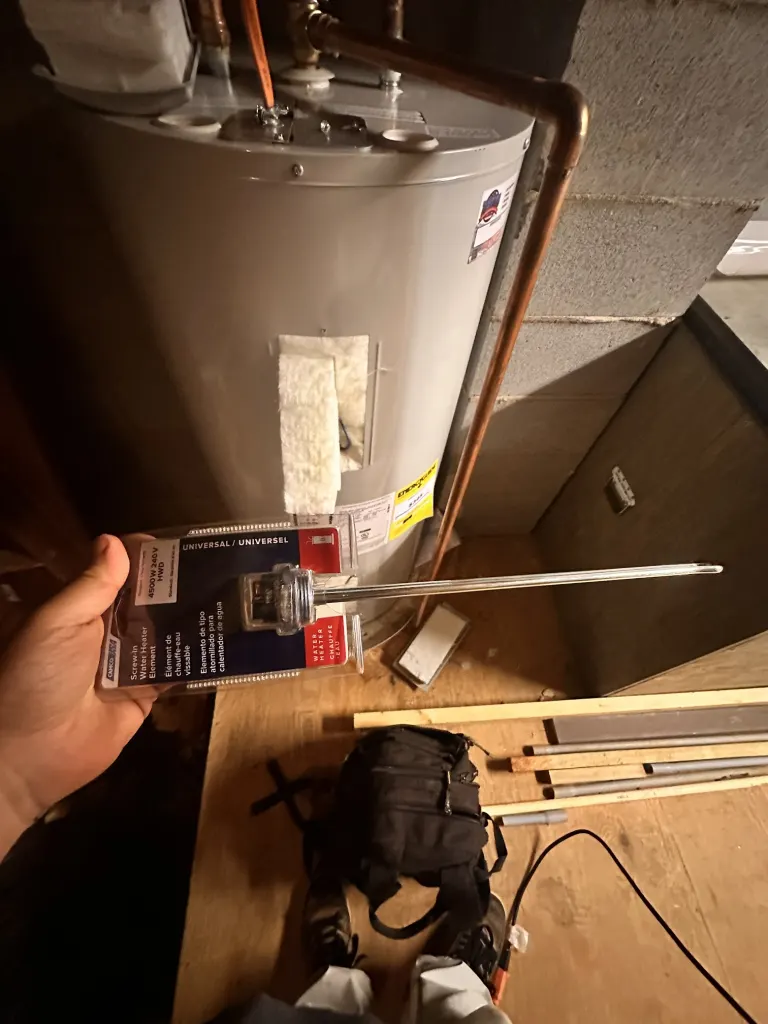
Water heater work does not always happen in a clean open garage. Around Spartanburg, our team sees crawlspaces, tight closets, exterior water heater huts, electric elements, older piping, pressure concerns, and installs that need to be corrected. That is why careful troubleshooting and clean workmanship matter.



Local Water Heater Service
Choose your city for local water heater repair, replacement, and installation information from Dave's.
Each city page covers local water-heater service details and the fastest way to schedule.
Water Heater FAQs
These are common questions Upstate homeowners ask when hot water quits, a tank leaks, a breaker trips, a gas heater will not stay lit, or the system no longer keeps up.The right answer depends on the actual failure and the home it serves.
Yes. Dave's repairs water heaters from our Spartanburg home base across nearby Upstate communities. We diagnose no hot water, leaking fittings, bad valves, failed elements, thermostat problems, breaker trips, ignition issues, venting concerns, pressure issues, and other water heater problems before recommending the next step.
We look at the unit's age, leak location, tank condition, repair value, safety concerns, installation quality, and whether the system still meets your hot-water demand. If the tank is sound and the issue is isolated, repair may make sense. If the tank is leaking, repeatedly failing, unsafe, or no longer keeping up, replacement may be the better long-term move.
A water heater can leak from the tank, drain valve, supply lines, fittings, temperature and pressure relief valve, expansion problem, or nearby plumbing. Not every leak means the tank has failed. We find the source before calling it a replacement.
Hot water can run out quickly because of a failed lower element, thermostat issue, sediment buildup, undersized tank, high household demand, dip tube issue, or an aging heater. On electric units, testing matters before replacing the water heater.
Yes. Dave's services and installs electric water heaters. That includes element testing and repair, thermostat replacement, breaker-trip troubleshooting, wiring concerns, electrical connections, and replacement planning when repair is no longer practical.
Because Dave's handles plumbing and electrical work, we do not ignore breaker trips or wiring concerns on an electric water heater.
Learn more about our electric water heater service.
Yes. Dave's handles tankless water heater service, installation, replacement planning, and demand checks. Tankless systems need proper sizing, correct venting or exterior-wall planning, maintenance access, flushing considerations, and enough hot-water capacity for the way your home uses water.
Learn more about our tankless water heater service.
Yes. A replacement needs to meet applicable code, manufacturer instructions, and safety requirements. Dave's installs water heaters according to South Carolina plumbing code, local city or county requirements, manufacturer specifications, and safe installation practices.
That can include shutoff valves, supply lines, venting, gas line condition, sediment traps or drip legs, expansion tank needs, drain pan setup, pressure concerns, relief-valve discharge, and electrical connections where applicable.
Many traditional tank water heaters last around 8 to 12 years, depending on water quality, usage, installation quality, maintenance, and overall condition. Some fail earlier and some last longer. Age matters, but it is not the only factor. We also look at leaks, performance, safety, repair cost, and the condition of the existing installation.
Dave's can help with urgent water heater problems such as active leaks, sudden no-hot-water issues, electrical concerns, water around the tank, relief-valve discharge, and related plumbing problems that should not wait.
For urgent issues, visit our emergency plumbing service page.
We look at the whole water-heater installation before we recommend the next step. We look at the actual failure, surrounding plumbing, electrical or gas-side details, venting, pressure, access, local requirements, and the quality of the existing installation.
If repair makes sense, we explain that. If replacement is the right call, we install cleanly, verify the work, and stand behind covered workmanship through the RightFirst Standard and 3-Year Workmanship Guarantee.