VETERAN OWNED FAMILY OPERATED BUILT DIFFERENT

Drain Cleaning & Sewer Service in Greer, SC Clear the Blockage. Find Out Why It Came Back.

Dave's Air Conditioning Plumbing and Electrical team serving Greer homeowners

Whether one fixture is stopped or dirty water is backing up through the lowest drain, we have the equipment and plumbing experience to restore flow and handle the line beyond the clog when needed.

Drain and sewer help when you need it

Need the Drain Moving Again?

Call Dave's when a drain slows down, backs up, or keeps clogging. We'll work to restore flow and give you a straight answer about what the line needs next.

Slow drain? Gurgling toilet? Sewer backing up? Call Dave's!
Fast AnswerTell us which fixtures are affected and how the problem started.
Drain, Sewer & Pipe RepairFrom clearing the stoppage to larger line repair when needed.
3-Year Workmanship GuaranteeCovered workmanship backed in writing.

Need service now?

Call Now

Fast answer. Clear dispatch.

Schedule Online

Google Customer Reviews

Why Homeowners Call Dave's

See what homeowners have shared about working with us.

Loading reviews...

Call Before Wastewater Reaches the Floor

Know the Drain Warning SignsBefore the Backup Spreads

A slow sink and a main-line backup are different calls. The fixtures involved, the way water moves between them, and whether the problem keeps returning tell us how serious the restriction may be.

When only one sink, tub, or toilet drains slowly, the restriction is often near that fixture or on its branch line. Everyday use can turn a slow drain into an overflow. A single slow fixture does not carry the same warning as several fixtures reacting at once.

Water rising in a tub when a toilet flushes is a warning sign. Multiple drains slowing during normal household use can signal a restriction affecting a shared branch or main line. Dirty water coming back through a low fixture can spread quickly across floors and belongings.

A line that opens and clogs again deserves a closer look. Recurring buildup, roots, or a damaged section farther down the pipe may be involved. In established homes near downtown Greer, age alone does not tell us what is happening inside the line.

A sewer odor can have more than one source. Gurgling can occur when air cannot move normally through a restricted drain. A wet or overflowing cleanout can mean wastewater is not moving away as it should. During a dirty-water backup, stop using water where possible and keep children and pets away from contaminated water.

DRAIN, SEWER + PIPE REPAIR

From Drain ClearingThrough Sewer Repair

A repeat problem beneath a tree-covered yard deserves more than another quick clearing. We handle fixture and main-line stoppages, camera inspection, hydrojetting or descaling where the pipe supports it, cleanout access, and sewer repair.

The RightFirst Standard

The RightFirst Drain& Sewer Standard

We do not sell every clog the same answer. We clear the stoppage with the right equipment, look deeper when the pattern calls for it, and explain the pipe condition before larger repair work begins.

01

Use the Right Equipment for the Blockage

A sink trap, toilet stoppage, branch line, and main sewer blockage do not call for the same equipment. We use the symptom pattern and available access to choose a clearing method that fits the line in front of us.

02

Use a Camera When It Changes the Decision

A camera is useful when a clog keeps returning, the location is uncertain, or a repair decision depends on seeing the pipe. A straightforward fixture stoppage may only need clearing. We do not turn every drain call into an inspection package.

03

Clean It When You Can. Repair It When You Must.

Hydrojetting or descaling can remove certain buildup when the pipe is suitable. If roots, collapse, offsets, or deterioration make repair necessary, we compare trenchless work and excavation based on the line's route, condition, and access.

  • The Right Tool for the LineCable, camera, jetting, access, and repair options are matched to the actual condition.
  • Clear FindingsWe explain what restored flow and what the pipe still needs.
  • 3-Year Workmanship GuaranteeCovered workmanship is backed in writing.
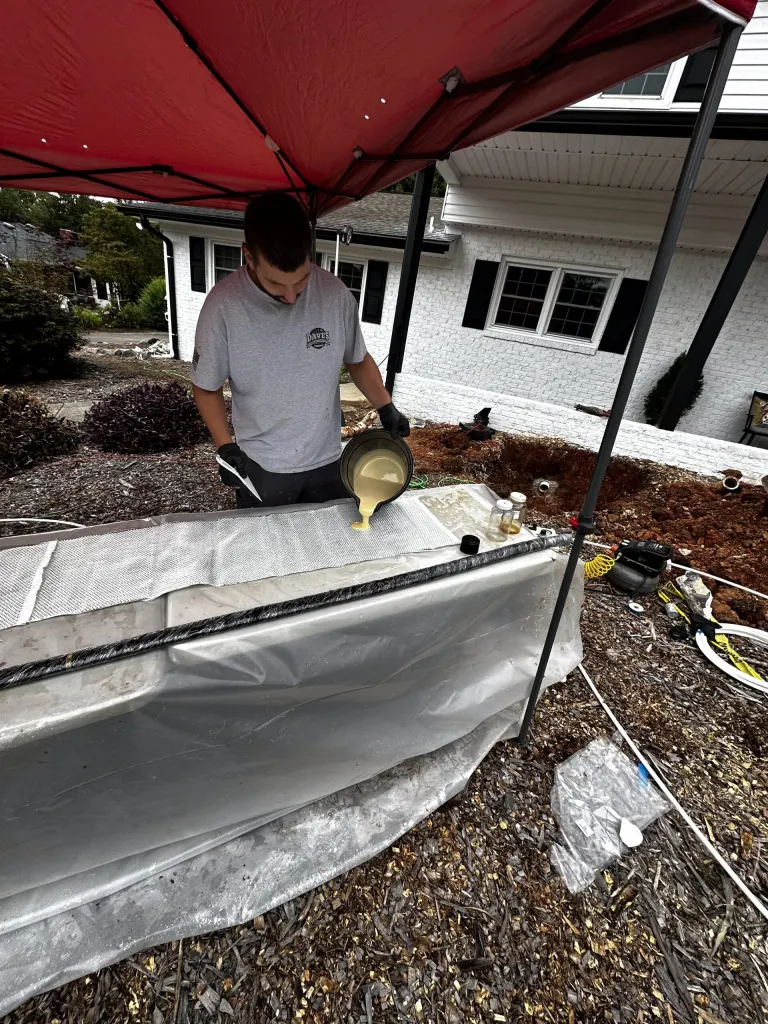
Plumber preparing trenchless sewer repair work
Sewer camera inspection equipment used before pipe liner repair
Pipe repair preparation for sewer service
Hydrojetting equipment used to clean sewer lines before repair
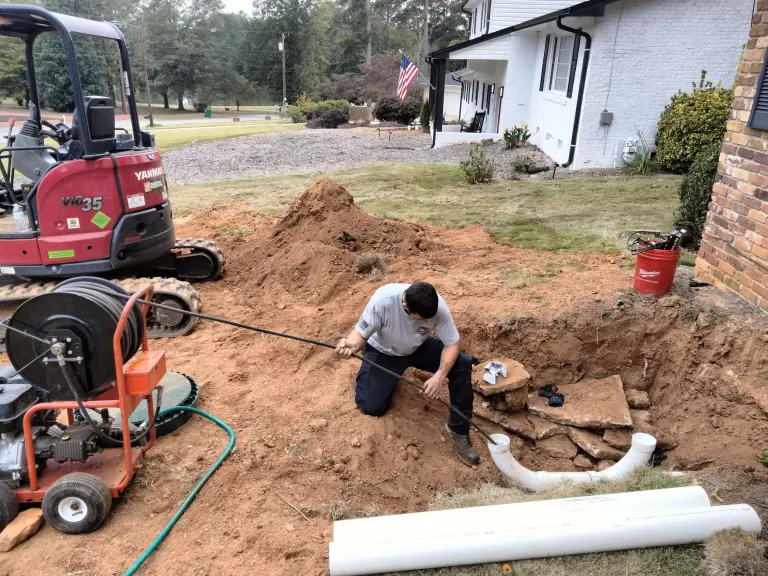
Cleanout installation and sewer access work
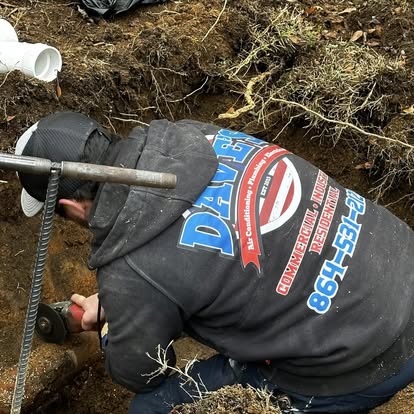
Dave's plumber working in a trench during sewer repair
Drain and sewer service equipment for pipe inspection and cleaning
Sewer repair jobsite equipment
Dave's plumber working in an excavation during sewer service
Sewer service jobsite photo
Google Customer Reviews

Reviews AroundGreer

Tap a pin to read review
Google Reviews
-- Mapped Reviews
Loading review map...

Drain & Sewer Questions

Straight Answers Before The Mess Gets Bigger

How can I tell whether it is one fixture or the main line?

We look at which fixtures are affected and how they react when water is used. One slow sink, tub, or toilet often involves a local fixture or branch-line restriction. Multiple slow fixtures, gurgling toilets, or water rising elsewhere can involve a shared branch or main line. The pattern tells us where to begin without pretending the symptom has already identified the exact blockage.

What should I do during an active sewage or dirty-water backup?

We recommend stopping water use in the home as much as possible. Do not flush toilets, run laundry, shower, or use sinks that can add to the backup. Keep children and pets away from contaminated water. Avoid chemical drain cleaners because they can create added hazards and will not solve a main drainage restriction.

Why does the same drain keep clogging after it was opened?

We treat a repeat clog as a reason to look beyond the immediate stoppage. The original restriction may have been only partly removed. Recurring buildup, roots, a low spot, an offset connection, or another pipe condition can also be involved. A returning problem deserves a closer look before anyone assumes the line needs major repair.

Do I need a sewer camera inspection for every clog?

No. We use a camera when trouble keeps returning, the location is uncertain, there are signs of a deeper line issue, or a repair decision depends on seeing the pipe. For a straightforward one-time fixture clog, opening the drain may be the sensible first move.

Are hydro jetting and descaling right for every drain line?

No. We consider these cleaning options when the pipe condition and type of buildup make them a good fit. Grease, scale, and recurring accumulation can respond well to the right cleaning approach. We evaluate the line first so the work suits the pipe rather than becoming a one-size-fits-all answer.

What if there is no accessible cleanout?

We assess the available access and explain practical options. Limited cleanout access can affect how we approach a drainage problem. In some cases, adding or improving a cleanout can make future maintenance, inspection, and repair decisions more manageable. It is not automatically necessary for every clog.

What do sewer odor and gurgling sounds mean?

We look at sewer odor and gurgling in the context of the whole symptom pattern. An odor can come from a dry trap, a drainage restriction, or another source. Gurgling can happen when air is displaced as water struggles through a restricted line. If those symptoms occur with multiple slow fixtures or a backup, the drainage system needs closer attention. A puddled yard after rain may be a separate outside drainage concern rather than a sanitary sewer problem.

Do roots mean my sewer line is damaged?

Not necessarily. Roots can enter through openings or joints and create recurring restrictions. Their presence does not tell us the full condition of the pipe. We may use inspection to determine whether root intrusion, cracks, offsets, deterioration, or another condition affects the repair options.

Will trenchless repair work, or will the yard need excavation?

We consider trenchless repair when the existing pipe has the condition and alignment needed for that method. It is not suitable for every line. A collapsed pipe, severe offset, significant belly, or another unsuitable condition may require conventional excavation or replacement. The right choice depends on what the line can support and where the problem is located.

Need the drain moving again?Call Dave's